
Lifespan varies more dramatically across these five owl species than in almost any other bird family, from a species with genuinely short average survival in the wild to one with banding records approaching thirty years.
Typical Lifespan by Species
- Great Horned Owl: average wild lifespan often cited around 13 years, with banding records confirming individuals living past 28 years
- Barred Owl: banding records confirm individuals living past 24 years
- Eastern Screech-Owl: considerably shorter-lived given its small size, typically a few years on average, with records up to around 14 years
- Barn Owl: notably short average survival in the wild, often cited in the range of just one to four years
- Snowy Owl: banding records show individuals living past nine or ten years, with captive individuals recorded well into their twenties
Barn Owl: A Genuine Outlier
Barn Owl’s strikingly short average wild lifespan stands out sharply against both its own captive longevity and the lifespans of the other four species covered here. High mortality in the wild, driven by starvation during harsh winters, vehicle collisions, and the rodenticide exposure covered in our rodenticide guide, likely explains much of this gap between wild and captive survival.
Why Captive Lifespan Differs So Much
Removing the major wild mortality pressures — starvation, vehicle strikes, poisoning, predation — allows captive Barn Owls to live considerably longer than their wild counterparts typically manage, a gap wide enough to make this species a genuinely useful illustration of just how much external pressure can shape realized lifespan versus a species’ biological potential.
The First Year Is the Hardest
As with most birds, a large share of owl mortality happens in the first year of life, driven by inexperience hunting, starvation, and vehicle collisions as young owls disperse from their birth territory. Individuals that survive that first year have meaningfully better odds for every year after.
Great Horned Owl: A Genuine Long-Lived Generalist
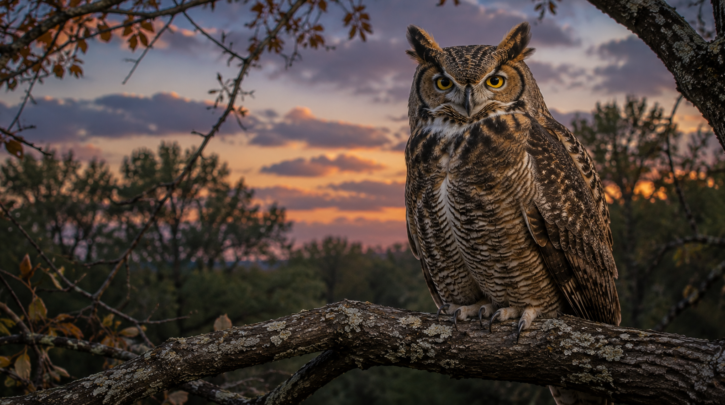
Great Horned Owl’s combination of broad habitat tolerance, an extremely varied diet covered in our diet guide, and few natural predators of its own likely contributes to its comparatively long lifespan among the species covered here.
What Increases Survival
- Avoiding rodenticide use on a property, directly reducing secondary poisoning risk
- Retaining large trees, snags, and other natural nest and roost sites
- Reducing vehicle strike risk by maintaining natural cover near roadways where owls hunt
- Providing correctly designed nest boxes for cavity-nesting species like Eastern Screech-Owl and Barn Owl
Want to help owls in the most direct way possible? See our rodenticide guide for the single most impactful change most hosts can actually make.
A Family Worth Understanding Species by Species
Because lifespan varies so dramatically across just five closely related species, generalizing about “owl lifespan” as a single figure genuinely undersells how differently each species’ ecology and body size shape its realistic survival odds in the wild.
How Banding Studies Track Owl Survival
Much of what’s known about owl lifespan comes from long-running bird-banding programs, where individual birds are fitted with a uniquely numbered leg band and tracked through recoveries or re-sightings over subsequent years, sometimes decades after the original banding.
Why Body Size Correlates With Lifespan Here
As with birds generally, larger body size tends to correlate with longer potential lifespan across this family, which helps explain why tiny Eastern Screech-Owl averages a considerably shorter life than the much larger Great Horned Owl, independent of any other ecological factor.
A Final Thought on Longevity
Whether a species averages a few years or several decades, every owl covered on this site faces the same basic set of risks in the wild — starvation, vehicle strikes, poisoning. Understanding what actually drives that mortality matters more for supporting real populations than any single average lifespan figure ever could on its own.