
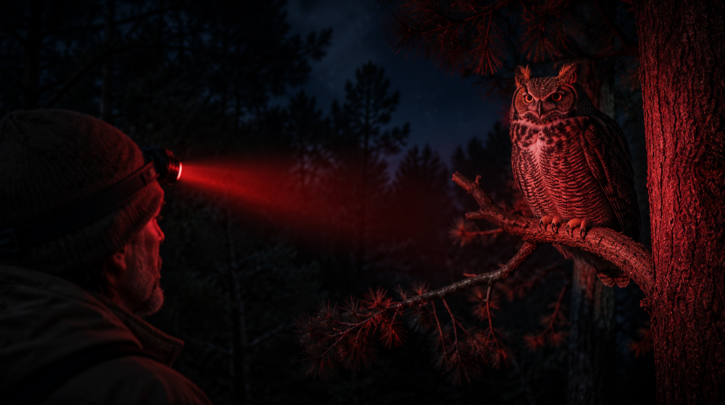

“Owling” — deliberately heading out after dark specifically to find owls — has its own dedicated gear culture, and a good red-light flashlight or headlamp is close to the center of it.
Why Red Light Specifically
Red light preserves human night vision far better than white light, letting your eyes stay adjusted to the dark between uses, while also generally disturbing an owl less than a harsh white beam directly in its face would. Experienced owl banders have specifically noted using small, dim red headlamps rather than bright white light when working directly with captured birds.
A Genuine Caution Worth Repeating
Even red light shouldn’t be aimed directly and repeatedly into an owl’s face at close range — brief, indirect illumination for identification purposes is the goal, not prolonged direct exposure.
What We Looked For
- A genuine red-light mode, not just a dimmed white beam
- Enough throw distance to pick out eyeshine or a perched bird at real field distances
- Compact size that fits comfortably in a pocket or on a pack strap
- Reasonable battery life for a full evening in the field
Fenix Flashlights
A flashlight brand with a genuine following among birders specifically for owling, prized for combining compact size with surprisingly strong beam distance — qualities that matter more here than raw brightness alone, since a good owling light needs to reach a perched bird well off the trail without requiring a bulky, heavy unit to do it.
See: Fenix Flashlights
Black Diamond Spot Headlamp
A hands-free headlamp option with a genuine red night-vision mode alongside its standard white beam, waterproof construction, and simple, glove-friendly controls — a practical choice for anyone who wants both hands free while walking and scanning simultaneously.
See: Black Diamond Spot Headlamp
LED Lenser Headlamps
Another headlamp line with a real following among nocturnal wildlife watchers, generally praised for beam quality and durability across extended field use.
See: LED Lenser Headlamps
A Simple Starting Setup
A single quality red-light headlamp covers most casual owling needs without requiring investment in multiple specialized lights, and can be supplemented later with a more powerful handheld flashlight if longer-distance scanning becomes a regular part of your routine.
Ready to put this gear to use? See our nocturnal behavior guide for when and how each species is actually most active in the field.
Owling Etiquette Beyond the Light Itself
Moving quietly, speaking softly if at all, and keeping any light use brief and indirect all matter as much as the specific gear chosen, since even the best red-light headlamp can’t compensate for a noisy, careless approach that alerts an owl well before it’s ever actually seen.
Rechargeable vs. Battery-Powered
Rechargeable models reduce ongoing cost and waste for anyone owling regularly, while disposable battery models offer a genuine advantage for occasional use or extended trips where charging access isn’t guaranteed.
Cold Weather Performance
Battery performance drops meaningfully in cold weather, a real consideration for anyone owling through winter specifically, when several of the species covered on this site are most vocally active. Carrying a spare battery or keeping a rechargeable unit warm inside a jacket pocket between uses helps offset this effect.
Final Thoughts
Gear matters less than habit here. Moving quietly, keeping any light use brief and indirect, and building genuine familiarity with local calls and roost areas over repeated trips will do more for a successful evening of owling than any single piece of equipment.
Start with a modest red-light headlamp, learn the local calls, and let real field experience guide any future gear upgrades from there.