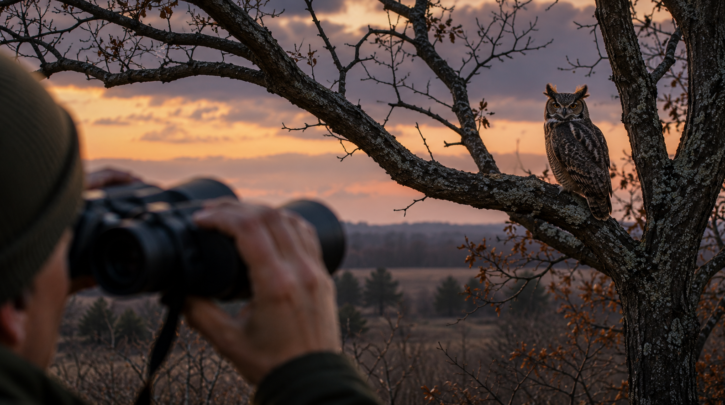

Because most owl viewing happens at dusk, at night, or in the dim shade of a daytime roost, low-light performance matters more here than for almost any other species.
Objective Lens Size: Go Larger Than Usual
While 42mm is a common general-purpose objective lens size, a larger 50mm objective genuinely helps gather more light during the low-light conditions most owl sightings actually happen in, at some cost to overall weight and bulk.
Magnification: 8x Remains a Reasonable Default
Higher magnification narrows the field of view and amplifies hand shake, both genuine drawbacks in already-dim conditions, making 8x a more forgiving choice than 10x for most owl-watching situations.
Exit Pupil: A Detail Worth Understanding
Exit pupil, calculated by dividing objective lens diameter by magnification, determines how much light actually reaches your eye. An 8×42 binocular produces a larger exit pupil than a 10×42, making the lower magnification option genuinely brighter in practice during low light despite the identical objective lens size.
Key Features to Check
- A larger objective lens, 50mm where weight allows, for genuine low-light performance
- ED (extra-low dispersion) glass for sharper resolution in dim conditions
- Waterproof and fog-proof construction for reliable use during evening dampness or fog
- A comfortable, secure grip for use in low light where visual feedback is limited
Combining Binoculars With a Red-Light Source
Because so much owl viewing happens at or after dusk, pairing binoculars with the red-light gear covered in our flashlight guide genuinely rounds out a complete owling kit, letting you first locate a bird by ear or eyeshine before confirming detail through the binoculars.
Budget vs. Premium
Entry-level 8×42 binoculars from established optics brands remain genuinely usable for owl watching, though premium glass with better low-light transmission offers a more noticeable real-world benefit here than it does for most daytime birdwatching.
Where to Buy
B&H Photo carries a wide range of birdwatching binoculars across price points, with detailed spec comparisons that make it easier to weigh objective lens size, magnification, and low-light performance against each other before buying.
Once you’ve got a pair, put them to use on our species identification guide — confirming facial shape and eye color is much easier with genuinely good low-light optics.
Weight and Extended Field Use
Because owling often involves standing still for extended periods scanning dim tree lines, the weight difference between a compact 8×32 and a larger 8×50 binocular becomes genuinely noticeable over a full evening, worth weighing against the real low-light benefit the larger objective lens provides.
Image Stabilization Considerations
Some binoculars include image stabilization technology that can meaningfully reduce the visible effect of hand shake, a genuine benefit in low light where a shaking image is considerably harder to resolve than in bright daylight.
Testing Low-Light Performance Before Buying
If possible, testing a specific model at dusk rather than relying purely on published specs gives a far more accurate sense of how a given binocular will actually perform for the low-light conditions most owl sightings genuinely happen in.
Final Thoughts
If forced to prioritize a single spec for owl-focused use, low-light performance — driven mainly by objective lens size and glass quality — matters more than magnification, weight, or price point alone.
But no pair of binoculars, however good, replaces the patience and quiet approach that owling actually demands. Choose the best low-light glass your budget allows, then put the real effort into timing and quiet observation — that combination is what delivers a genuine sighting. Good glass just makes the moment sharper once it arrives.