
Every owl is an obligate carnivore — there’s no plant matter in this diet at all, a genuine contrast to the omnivorous jays. Beyond that shared trait, though, the five species covered here range from remarkably broad generalists to a near-total rodent specialist.
Great Horned Owl: An Extreme Generalist
Few predators in North America have a diet this broad — mice, rats, rabbits, skunks, reptiles, and other birds including hawks and even other owl species. This willingness to take genuinely dangerous or unusual prey, including skunks despite the obvious defensive consequences, is part of what makes Great Horned Owl one of the continent’s most successful raptors.
Barred Owl: Small Mammals and a Genuine Aquatic Habit
Barred Owl relies heavily on voles and mice, along with amphibians and insects, but stands out for a genuinely unusual habit among owls: it regularly eats crayfish, one of the few owl species with any meaningful reliance on aquatic prey.
Eastern Screech-Owl: A Broad Diet for a Small Body
Despite its small size, Eastern Screech-Owl takes a genuinely varied diet — insects, small mammals, small birds, and amphibians — reflecting the same opportunistic flexibility seen in its larger relatives, just scaled down to prey it can actually manage.
Barn Owl: A Genuine Rodent Specialist
Barn Owl diet runs heavily toward small rodents — voles, mice, and rats often make up well over 90 percent of what a given population eats. This specialization is central to the species’ agricultural value, covered in our rodenticide guide.
Snowy Owl: Tied Directly to Lemming Cycles
On its Arctic breeding grounds, Snowy Owl depends heavily on lemmings, and lemming population booms and crashes directly affect how successfully Snowy Owls breed in a given year. During winter and irruption years, the diet broadens considerably to include ptarmigan, waterfowl, and other available prey.
Barn Owl diet runs so heavily toward rodents that a single nesting family can eat well over a thousand mice, rats, and voles in a single year — a genuine, quantifiable pest-control service.
How Owls Actually Catch Prey
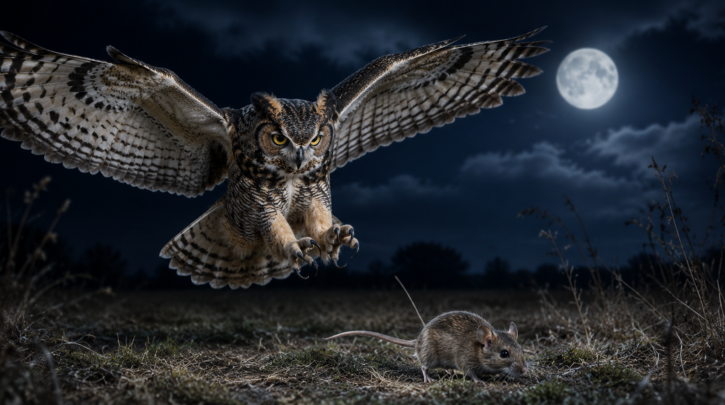
Most owls hunt using a perch-and-wait strategy or slow, low quartering flight over open ground, striking with their talons once prey is located by sound or sight, then killing with a bite to the head or neck. The silent flight covered in our silent flight guide is central to how effectively this strategy actually works.
Swallowing Prey Whole
Smaller prey is often swallowed whole or in large pieces rather than torn apart first, which sets up the pellet regurgitation covered in our owl pellets guide — indigestible material like fur and bone gets compacted and regurgitated rather than passing through the digestive system.
Curious why none of this diet can be replicated at a backyard feeder? See our feeding guide for why this family works completely differently.
Diet Reflects Habitat
Across all five species, diet composition tracks closely with local habitat and prey availability — a Barn Owl in rodent-rich farmland eats very differently than the same species might in a habitat with fewer small mammals available, reinforcing just how directly habitat quality shapes real-world diet.
How Diet Shifts Seasonally
Prey availability changes across the year for every species covered here, with insect availability peaking in summer and small mammal activity shifting with snow cover and breeding cycles. Great Horned Owl’s genuinely broad diet gives it more flexibility to adjust across these shifts than a more specialized species like Barn Owl can manage.
Regional Diet Variation
Diet composition also varies meaningfully by region — a Barred Owl in a wetland-adjacent forest may rely more heavily on crayfish and amphibians than a population living in drier forest habitat farther from standing water, illustrating how much local ecology shapes actual prey selection within a single species.
Why Understanding Diet Matters for Conservation
Knowing exactly what a species eats, and how tightly that diet is tied to a specific prey base like Snowy Owl’s lemming dependency, helps explain why some owl populations are more vulnerable to environmental change than others, a theme covered further in our habitat and range guide.
A Family Defined by Its Range of Strategies
From Great Horned Owl’s willingness to take almost anything to Barn Owl’s near-total rodent focus, this diversity of feeding strategy within one family mirrors the range of specialization already documented across several other bird families, just expressed here entirely through predation rather than any seed or nectar preference at all.