
As covered in our nest guide, only Eastern Screech-Owl and Barn Owl reliably accept a nest box. These picks are built specifically for those two species — nothing here will attract Great Horned Owl, Barred Owl, or Snowy Owl.
What We Looked For
- Correct entrance dimensions for the target species
- Genuine ventilation and drainage rather than a sealed box that traps moisture
- A fledgling ladder or textured interior surface young owls can actually climb
- Durable construction able to withstand years of outdoor exposure
Duncraft Bird-Safe Screech Owl Nesting Box
Built from durable recycled plastic with genuine ventilation, drainage, and a fledgling ladder included as standard. It comes with wood chips for nesting material and is sized to mount against a flat surface at least ten feet up, matching the placement guidance covered in our nest guide.
See: Duncraft Bird-Safe Screech Owl Box
Duncraft Screech/Saw-Whet Owl Nesting Box
A similar recycled-plastic design with an updated half-moon entrance intended to make coming and going easier for an adult owl, while still including the same ventilation, drainage, and fledgling ladder features.
See: Duncraft Screech/Saw-Whet Owl Box
Placement Reminder
Both boxes should be mounted roughly ten feet up on a tree trunk or flat surface, ideally beneath some canopy shade rather than in full open exposure, consistent with the natural cavity preferences covered elsewhere on this site.
Barn Owl Box Company’s Patented Barn Owl Box
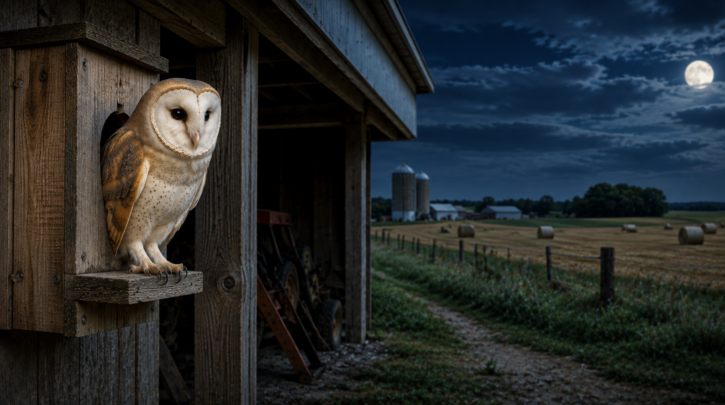
A dedicated company built specifically around barn owl and screech owl housing, with a patented plastic Barn Owl Box now used across thousands of vineyards, orchards, and farms as part of genuine, working rodent control programs — a direct real-world extension of the pest-control case made in our rodenticide guide.
See: Barn Owl Box Company’s Patented Barn Owl Box
A patented plastic Barn Owl Box design is now in use across thousands of vineyards and farms as part of genuine, documented rodent control programs — nest boxes doing real agricultural work, not just hosting a bird for its own sake.
Setting Realistic Expectations
Even a correctly designed, well-placed box can take a full season or longer to attract a resident pair, and success depends heavily on whether the target species is genuinely present in the surrounding region at all.
Want to understand the full range of owl nesting strategies before committing to a box? See our nest guide for why only two of five species actually use one.
A Modest, Genuinely Worthwhile Investment
Compared to most conservation actions available to an individual property owner, a correctly placed Screech-Owl or Barn Owl box is a genuinely modest investment with real, documented payoff — both for the owls themselves and, in Barn Owl’s case, for actual rodent control on the property.
Cleaning and Maintenance
Both box types benefit from an annual cleanout between nesting seasons, removing old debris and refreshing wood chip bedding where used, keeping the box genuinely appealing to a returning or new pair rather than accumulating years of buildup.
When Not to Disturb an Active Box
Once a pair has moved in and eggs or chicks are present, cleaning and inspection should wait until the season is fully over, consistent with the general disturbance caution covered throughout this site’s nesting content.
Matching the Box to Local Species
Confirming which of the two box-using species is actually present in your region before purchasing, covered in our habitat and range guide, prevents investing in a design that simply doesn’t match the local population.
Materials: Plastic vs. Wood
Recycled plastic construction generally outlasts wood in outdoor conditions and resists moisture damage more reliably, though a well-sealed wooden box, checked and maintained annually, can also serve for many seasons if plastic isn’t the preferred material for a given property.
A Note on DIY Boxes
Plans for building a correctly dimensioned Screech-Owl or Barn Owl box exist for anyone wanting a DIY approach, though matching the specific entrance size, interior floor space, and ventilation requirements precisely matters more here than it might for a simpler songbird box, given how much smaller the margin for error is with cavity-nesting owls specifically.
A Final Thought on Nest Box Success
Even with the correct box, correct placement, and confirmed local species presence, attracting a nesting pair ultimately depends on factors outside direct control — but getting every controllable factor right genuinely maximizes the odds compared to a haphazard approach.
Every choice covered in this guide — box type, material, placement, timing — is entirely within a host’s control, which is exactly why getting each one right matters.