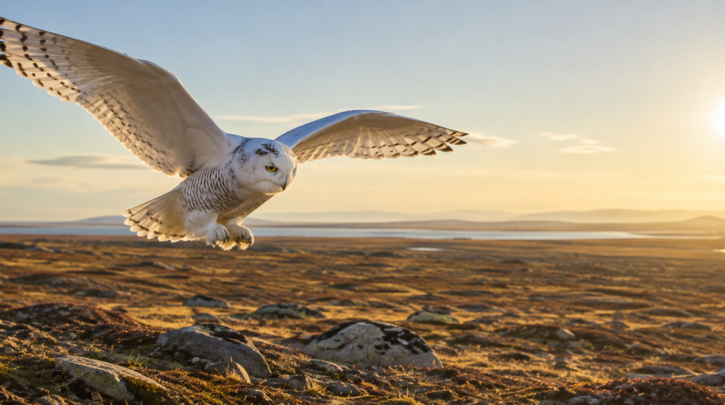

Summer is when the genuinely unique branching stage covered in our baby owls guide becomes most visible across this family, while Snowy Owl experiences something no other species on this site deals with at all: continuous daylight.
Great Horned Owl and Barred Owl: Branching in Progress
Summer is peak branching season for these two larger species, with young owlets climbing around nearby branches well before real flight, exactly the behavior covered in our fledging guide that’s often mistaken for an animal in distress.
Eastern Screech-Owl: Often Already Independent
Given this species’ faster fledging timeline, covered in our fledging guide, Eastern Screech-Owl families may already be approaching independence by mid to late summer, considerably ahead of the larger species still working through branching.
Barn Owl: A Second Brood in Good Years
In a genuinely productive vole year, Barn Owl’s flexible breeding timing, covered in our spring guide, can allow a summer brood in addition to an earlier one, directly reflecting the prey-driven clutch size flexibility covered in our eggs guide.
Snowy Owl: Hunting Around the Clock
Continuous Arctic daylight during summer means Snowy Owl can hunt at any hour, supporting the intensive feeding demands of a growing brood without the daily light restriction every other species on this site deals with.
A Season Tied Directly to Lemming Success
Summer breeding success for Snowy Owl depends heavily on how the local lemming population is actually doing that year, covered in our eggs guide, with a strong lemming year translating directly into more successfully raised chicks.
A Good Season for Pellet Collection
Summer, with an active nest or a recently fledged family still nearby, is often the most productive time to look for fresh pellets beneath a known roost, covered in our pellets guide, before the family disperses more widely heading into fall.
Curious what happens once branching finishes and true independence sets in? See our baby owls guide for the full developmental timeline.
A Season for Careful, Respectful Observation
Because branching owlets are especially vulnerable to unnecessary human interference, summer is a season where distant, patient watching matters most — rather than close approach.
A Season That Tests Habitat Quality Directly
Few stretches of the year make prey availability and overall habitat quality this visible — a territory genuinely rich in small mammals and insects will show it clearly in how successfully a brood is fed and fledged, compared to a territory that looks similar on the surface but offers less actual food.
Final Thoughts
Summer moves quickly, and the visible gap between a fresh hatchling and a nearly independent young owl can close in just a few weeks for the faster-developing species. Checking in on a known nest or family group more than once a week during this stretch is worth it — blink at the wrong moment, and an entire developmental stage can pass by almost unnoticed.