
Winter is genuinely the toughest season for survival across most of this family — and, for Great Horned Owl specifically, it’s already the start of an entirely new breeding season.
The Hardest Season for Most Species
Barred Owl, Eastern Screech-Owl, and Barn Owl all face real survival pressure through winter, relying on stored fat reserves, available prey, and successful hunting through cold and often snow-covered conditions. Barn Owl’s notably short average wild lifespan, covered in our lifespan guide, is driven substantially by winter mortality in harsh years.
Great Horned Owl: Already Nesting
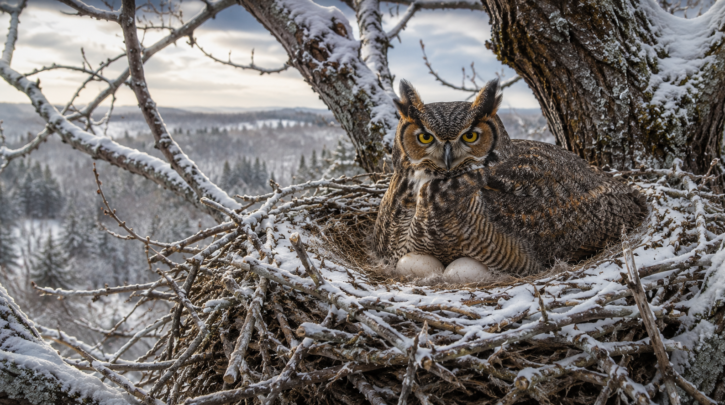
While every other species is simply surviving, Great Horned Owl often begins incubating eggs as early as December or January, the earliest nesting timeline covered anywhere on this site, taking advantage of the reused nest sites covered in our nest guide before returning hawks reclaim them.
Snowy Owl: Peak Viewing Season, When It Happens
For hosts in regions affected by a given year’s irruption, winter is when Snowy Owl sightings peak, often at the open fields, shorelines, and airports covered in our habitat and range guide.
Why Rodenticide Avoidance Matters Most Right Now
Winter’s already elevated mortality pressure makes avoiding rodenticide, covered in our rodenticide guide, particularly important during exactly the season when owls can least afford any additional survival burden.
Territorial Calling Builds Toward Spring
Toward the end of winter, territorial hooting and calling generally increases across most species as the coming breeding season approaches, making late winter evenings a genuinely good time to actually hear this family even in the cold.
Ready to support owls through the toughest stretch of the year? Revisit our nest box guide and rodenticide guide for the two most impactful actions available right now.
Looking Back at a Full Year
From Great Horned Owl’s midwinter nesting through spring’s scattered stages, summer’s visible branching, and fall’s quiet dispersal, the owl year genuinely never has an off season — something is always happening across at least one of these five species, all year round.
A Reasonable Winter Checklist
- Keep rodenticide off the property entirely, especially through the highest-mortality winter months
- Check that any nest boxes remain structurally sound ahead of the coming spring nesting season
- Watch regional birding reports for early signs of a developing Snowy Owl irruption
- Listen for increasing territorial calling as winter progresses toward spring
A Fitting Close to a Genuinely Varied Family
Between Great Horned Owl already raising chicks, three other species simply surviving, and Snowy Owl potentially drawing crowds at a local field, winter captures just how differently five closely related owl species have each solved the challenge of getting through the hardest part of the year.
A Reasonable Winter Checklist
- Keep rodenticide off the property entirely, especially through the highest-mortality winter months
- Check that any nest boxes remain structurally sound ahead of the coming spring nesting season
- Watch regional birding reports for early signs of a developing Snowy Owl irruption
- Listen for increasing territorial calling as winter progresses toward spring
A Fitting Close to a Genuinely Varied Family
Between Great Horned Owl already raising chicks, three other species simply surviving, and Snowy Owl potentially drawing crowds at a local field, winter captures just how differently five closely related owl species have each solved the challenge of getting through the hardest part of the year.
Thank You for Following This Family Through a Full Year
From silent flight and asymmetrical hearing through nest boxes, rodenticide, and now a complete seasonal cycle — owls are specialized, resilient, and genuinely worth the attention this site has devoted to them.
Whatever brought you here — a hoot outside your window, a school pellet dissection, or simple curiosity about a bird most people only ever hear — we hope it left you with a deeper appreciation for one of the most specialized, resilient families in the bird world.
Put out the right nest box, leave the rodenticide on the shelf, and step outside on a quiet evening. The rest, more often than not, takes care of itself.