
Four of the five species covered on this site stay put year-round. The fifth, Snowy Owl, shows a genuinely unpredictable pattern that echoes the winter finch irruptions, just on a considerably larger and more famous scale.
Four Resident Species
Great Horned Owl, Barred Owl, Eastern Screech-Owl, and Barn Owl are all essentially non-migratory, remaining in the same general territory throughout the year across most of their range, similar to the resident pattern shown by woodpeckers and chickadees.
Snowy Owl: A Genuine Irruptive Migrant
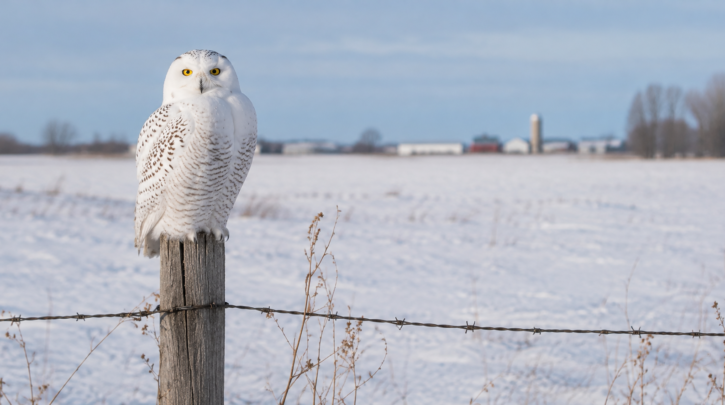
Snowy Owl breeds on Arctic tundra and winters irregularly farther south in some years, producing the same kind of unpredictable, food-driven movement observed in Pine Siskin and Common Redpoll, both finches — just involving a considerably larger, more visually striking bird.
A Genuinely Debated Mechanism
Researchers haven’t fully settled on what drives a given irruption. One hypothesis ties large southward movements to a poor lemming year on the breeding grounds, pushing hungry owls to search farther afield. Another proposes that an unusually successful breeding season produces more young birds than the local range can support, and it’s this population surplus, not hunger, driving the biggest irruptions. This remains a genuinely open question, similar in spirit to the individually variable migration pattern documented in Blue Jay.
Why Irruptions Are So Noticeable
Because Snowy Owl is large, pale, and active during the day even in winter, an irruption year tends to draw far more public attention than a comparable finch irruption, with individual birds sometimes becoming local celebrities photographed repeatedly at the same field or shoreline.
Local Movement Within Resident Populations
Even among the four largely resident species, some short-distance seasonal movement can occur — shifting to a more sheltered winter roost site, for example — without this qualifying as true migration in any meaningful sense.
Curious what these species are actually doing when they’re not migrating? See our nocturnal behavior guide for hunting and activity patterns across the whole family.
A Family That Otherwise Stays Put
Outside Snowy Owl, the overwhelming resident tendency across this family means most owl sightings reflect a genuinely stable local population rather than any seasonal comings and goings — a meaningfully different pattern than migratory songbirds.
Following regional birding reports through fall and early winter is the most practical way to know whether a given year is shaping up as a genuine Snowy Owl irruption. Either a quiet resident-only winter or a real irruption is a normal part of hosting this family, and neither reflects anything wrong with a particular yard or region.
Snowy Owl irruptions and Blue Jay’s unresolved migratory variability both stand as useful reminders that migration research remains a genuinely active field, not a settled body of knowledge, even for species this widely studied.