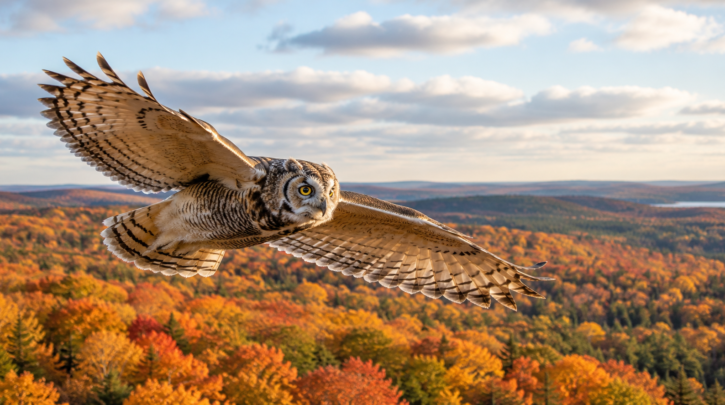

Fall marks a genuine transition across this family — young birds from spring and summer broods disperse to find their own territory, and for Snowy Owl specifically, fall is when a potential irruption year actually begins to take shape.
Post-Breeding Dispersal
Great Horned Owl, Barred Owl, Eastern Screech-Owl, and Barn Owl all see young birds leave their parents’ territory in fall, searching for an unclaimed area of their own. This dispersal period carries real risk, tying directly into the first-year mortality covered in our lifespan guide.
A Second Calling Season
Alongside spring, fall is one of the more reliable seasons to actually hear this family, as young dispersing birds and territory-holding adults both call more frequently while sorting out who holds which patch of habitat heading into winter.
Snowy Owl: The Irruption Question Begins
Fall is when the genuinely unresolved irruption pattern covered in our migration guide starts to become apparent, as birders and researchers watch for early signs of unusual southward movement tied to the previous summer’s lemming and breeding outcomes on the Arctic tundra.
Why Fall Sightings Matter for Prediction
Early fall Snowy Owl sightings well outside the typical breeding range are often the first real indicator of a developing irruption, making regional birding reports genuinely useful for anyone hoping to track whether a given winter will bring this species south in numbers.
Molt and Preparation
Adults across several species complete a post-breeding molt during fall, entering winter in fresh plumage better suited to the demands of the coldest months ahead.
A Good Season to Support Dispersing Young
Retaining habitat and avoiding rodenticide, covered in our rodenticide guide, matters just as much for a young, newly independent owl establishing its first territory as it does for an established breeding pair.
Want to know what winter actually brings for this family? See our winter guide for how the season plays out differently across all five species.
A Transitional Season Worth Watching
Fall doesn’t offer the dramatic visibility of active nesting or branching, but the quiet work of territory establishment and, for Snowy Owl, the first hints of a coming irruption make it a genuinely important season to pay attention to.
A Transitional Season Worth Watching
Fall doesn’t offer the dramatic visibility of active nesting or branching, but the quiet work of territory establishment and, for Snowy Owl, the first hints of a coming irruption make it a genuinely important season to pay attention to.
A Reasonable Time for a Habitat Check
Confirming that nest boxes are structurally sound and that any planned habitat improvements are actually in place before winter arrives gives newly dispersing young owls the best possible chance of finding suitable territory nearby.
A Reasonable Way to Watch This Season
Listening for calling activity at dusk, without necessarily expecting a visual sighting, offers a genuinely productive way to track fall territory establishment even when the birds themselves remain largely out of sight.
Final Thoughts
Fall asks for patience more than any other season on this site, rewarding careful listening over dramatic visual sightings. Whatever territory a young owl manages to establish now directly shapes its odds through the harder months ahead — and for anyone tracking a possible Snowy Owl irruption, fall is the season to start paying closer attention.